Showing posts with label Parenting. Show all posts

Tuesday, October 11, 2022

The Real Cause of Infertility

- No comments
Infertility can be defined in two ways: as inability to conceive after a year of regular sexual intercourse without contraception, or as repeated ectopic pregnancies, miscarriages or perinatal loss. Male and female specific factors account for about 30% of the infertility causes (individually);the combination of male and female causation leads to an additional 20% and the remaining 20% are caused by uncertain origins.


When one is dealing with infertility, as much as it is important to strictly follow the rules of the treatment, it is equally important to make sure that you have the correct diagnosis of the root cause of your condition. In this article you will find a broad outline, enumerating the various probable causes of infertility.

Why it is important to determine the causes.


Infertility may be caused due to a multitude of factors at a time, or it may be the result of perhaps the deviation of a certain single factor from its premeditated path. Since misdiagnosis can often lead to further fertility complications, the very first step of treating and curing infertility depends largely on indentifying the root cause right in the beginning of treatment.

The broad causes of infertility in females may be listed as follows:


. Anovulation: In females, ovulatory problems are the most common causes of infertility. The failure to ovulate may be due to a number of factors:
  • Hormonal imbalance is the most frequent cause of anovulation; when the ovaries produce immature eggs, pregnancy becomes impossible.
  • Women with polycystic ovaries suffer from a decreased secretion of FSH and increased secretion of LH and testosterone; therefore polycystic ovarian syndrome may lead to anovulation in women.
  • Approximately 20% of the cases of infertility occur due to the malfunctioning of the hypothalamus, the gland which controls hormonal stimuli, resulting in immature eggs. The pituitary gland is responsible for the regulation of LH and FSH, and its malfunctioning produces immature eggs.
  • Damage to the ovaries caused by previous surgeries, ovarian cysts, tumors and infections may lead to production of immature eggs as well.
  • Premature menopause and follicular problems are also responsible for anovulation.
Improper functioning of fallopian tubes: Viral and bacterial infections of the fallopian tubes are the primary cause of their malfunction.

Appendicitis and colitis are abdominal problems which lead to blockage of the fallopian tubes. Tubal damages may also be caused by previous surgeries, which render the tubes incapable of passing eggs. Ectopic pregnancy, which occurs within the tube, is a potential threat to life that also causes tubal damage. Congenital tubal defects are rare, but not impossible to come across as causes of infertility.

Use of drugs: Smoking, drinking and using other drugs have been known to decrease the chances of getting pregnant.

Problems in the Immune system: This problem includes autoimmune reactions in the body and the creation of antisperm antibodies which exterminate sperms. Natural killer cells, which when present in excess, can damage the embryo in the uterus. The antinuclear antibodies cause inflammation of the uterus when present in excess. The presence of antisperm antibodies in the female's body kills off the sperms before they can fertilize the egg.

Although the causes of infertility are many, they are fairly easy to overcome, especially when diagnosed in the early stages. Using a holistic approach, comprising of the prescribed medicines, following a healthy diet, regular exercise, abstinence from alcohol, nicotine and other drugs, stress management, acupuncture etc. guarantees positive results. Due to the complex and multifactoral nature of infertility, the problem can be solved permanently only by dealing with it in the holistic way, which tackles all the root causes of this condition rather than focusing on specific triggering elements.


What exactly is infertility? - Signs of Infertility

- No comments
The problems with either conceiving a child, or with carrying out the pregnancy to its eventual fruitful end, fall under the definition of infertility. Infertility is the incapability of an individual to become pregnant, in case of females, or the incapability to induce pregnancy, in case of the males. The inability of an individual to carry out a pregnancy to its full term is also dubbed infertility. How does one recognize infertility? What are the signs of infertility?


Signs of infertility are not always evident. Most people go through life without knowing there is a problem with their reproductive systems, attributing failed pregnancies to providence. In fact, miscarriages are the most common indicator of infertility. Signs of infertility in women:

In women, the signs of infertility are more readily recognized as compared to men. Endometriosis causes the lining of the uterus to grow outside the uterus.

Bacterial infections may begin around the uterus and spread to other reproductive organs, resulting in infertility. Fibroids in the uterus are indicative of infertility. Tumors in the cervix often cause stenosis, or narrowing of the cervix, which is a common indicator of infertility.

Ovulating before the tenth day and after the twentieth day of one's monthly cycle, pre-menstrual spotting, menopausal symptoms, etc. are indicative of luteal phase defect, and thus in turn are signs too.

Irregular menstrual cycles are the most common indication in females that they might have some problems with fertility. However, an irregular menstrual cycle is not conclusive in itself, but it is definitely one of the signs of infertility.

Issues regarding body weight are often indicators of being infertile. For a woman, being too thin, or anorexic, will definitely hinder pregnancy, since the body does not have the proper nutritional requirements, or the required strength.

Alternatively, obesity can also be a sign. Obesity is accompanied by hormonal imbalance, which affects the reproductive system and pregnancy. Signs of Infertility in Men:

Like females, in males too, either obesity, or anorexia, is an indication that he is infertile. Apart from these, anatomical defects may also be signs of infertility. Undescended testicles, or damage to scrotum and the gonads, are possible indicators too. Wearing tight undergarments, or exposing the testicles to heat, may render the person unable to produce the required number of sperms, or unable to produce sperms altogether, resulting in infertility.

Determining the signs of infertility:


There are many medical procedures for detecting the signs that help to determine whether an individual is infertile or not. Doctors usually prescribe one or more of the following medical tests:

. Hysterosalpingography. A dye injected into the vagina is monitored to check for blockage in the fallopian tubes or uterus.

. Laparoscopy. If disease and other physical problems are present in the ovaries, fallopian tubes, or in the uterus, infertility is suggested. This may be detected through laparoscopy.

Infertility is a problem which can be solved if it is addressed in the holistic way, which is, using a multifaceted method of healing. Getting regular health checkups, taking supplements to combat existing problem, exercising and stress reduction techniques are only part of the holistic solution to infertility. The holistic approach is not only a surefire way to increase your chances of conception it also guarantees a safe and healthy pregnancy.

This article is based on the book, "Pregnancy Miracle" by Lisa Olson. Lisa is an author, researcher, nutritionist and health consultant who dedicated her life to creating the ultimate pregnancy solution guaranteed to permanently reverse the root of infertility, help you get pregnant quickly and naturally and dramatically improve the overall quality of your life,  without the use prescription medication and without any surgical procedures. Learn more by visiting her website: 


Why Is Pregnancy Miracle? - The Best Selling Infertility Cure Book In Internet History

- No comments
Pregnancy Miracle is the #1 best selling infertility Cure ebook in the history of the Internet for a reason...

Thousands of women of almost every age have completely reversed any infertility issues they had and got pregnant naturally, without drugs, risky surgery or "magic potions" simply by using the clinically proven, scientifically-accurate step by step method found inside this amazing Pregnancy guidebook.


Lisa Olson, a certified nutritionist, health consultant and author has not just pumped out yet another "pregnancy program" into an already over-saturated market. Lisa's Pregnancy Miracle can be more accurately described as an "Pregnancy Bible." It is quite simply one of the most comprehensive, complete, and precise guides to infertility freedom you will ever read. What makes it so much different than other pregnancy publications on the market?

Well first of all, it's not just a "infertility help" program, it's an infertility cure program. This may seem like semantics or wordplay at first, but once you've read just the first chapters, there will be no doubt in your mind that pursuing "help with your pregnancy" is not only the wrong goal, it may be the reason that you've failed to get pregnant until now. Pregnancy Miracle shows you exactly why you should fix the internal problem that's hindering your chances of getting pregnant and then goes on to show you exactly how to do it.

Secondly, what makes Pregnancy Miracle different is the amount of attention that is paid to each and every element required to get pregnant the natural way. Pregnancy Miracle not only thoroughly discusses the lies, myths and fallacies surrounding a very confusing subject, it is simply the most detailed book about pregnancy and infertility, Chinese Medicine and holistic health ever written.

The Pregnancy Miracle book is quite extensive (250 pages of rock solid content) which focuses on 100% natural method for getting pregnant quickly. That means there aren't recommendations for harsh prescription drugs or surgeries with nasty side effects. In Pregnancy Miracle core formula section (The 3 step system) - Nothing is held back. In this section, Lisa gives a detailed overview of each step, and then dives into the specifics in a perfect chronological order. There are also outstanding charts and checklists which make it very easy to know where you are at in the program and follow it.

Because the Pregnancy Miracle program is not a quick fix ‘fairy tale’ cure but a complete holistic solution aimed at eliminating the root cause of fertility problems(regardless of your age) and ensure your will get pregnant quickly, it does take work and persistence to complete. "The dictionary is the only place success comes before work" says Lisa, as she emphasizes the "no quick fix" philosophy behind the entire book.

If there is any drawback to the Pregnancy Miracle ebook, it's that it contains so much information, that some readers may find it a bit overwhelming. Those who are looking for a quick start type of pregnancy program, might be a bit intimated at first. The good part however, is that even these types of readers can feel confident and assured that it will be worth the effort because this will literally be the last book they ever have to buy on the subject.

Who will benefit most from Pregnancy Miracle?


In the broadest sense, anyone and everyone who wants to get pregnant naturally and regain their natural inner balance will benefit from Pregnancy Miracle. This ebook is honestly for everyone. Even women without fertility issues. This is a total health rejuvenation program better than 98% of the nutrition and alternative health books on the market. In fact, the advice in this ebook is guaranteed to help you with any other health condition you might have, especially if you suffer from hormonal disorders, digestive problems, insulin related disorders, allergies and acne.

In terms of graphic design, Pregnancy Miracle is a clean and professionally formatted PDF e-book. It is well organized and ideal for printing and reading in the comfort of your own home.

This impressive and unique publication has changed many lives and the hundreds of inspiring testimonials and success stories are found on the Pregnancy Miracle website archives as proof.

The Bottom line?


Anyone looking for a quick fix solution to getting pregnant, anyone looking to be told fairy-tales, and anyone looking for a "magic bullet", pills, over the counters, 'get pregnant in 2 weeks' hyped up programs should not waste his or her time with Pregnancy Miracle.

On the other hand, anyone searching for the truth about pregnancy, fertility issues and alternative health and who is ready and willing to put in some work and make the lifestyle changes necessary to get pregnant fast and give birth to healthy children, will find Pregnancy Miracle to be one of the best investments they ever made in their lives. 


What is Phonemic Awareness?

- No comments
Phonemic Awareness is defined as the ability to identify, hear, and work with the smallest units of sound known as phonemes. It is NOT the same as phonological awareness, instead, it is a sub-category of phonological awareness. For example, phonemic awareness is narrow, and deals only with phonemes and manipulating the individual sounds of words - such as /c/, /a/, and /t/ are the individual sounds that make up to form the word "cat". Phonological awareness on the other hand, includes the phonemic awareness ability, and it also includes the ability to hear, identify, and manipulate larger units of sound such as rimes and onsets.


Phonemic awareness can be taught very early on, and will play a critical role in helping children learn to read and spell. While it's not set in stone on when a child can learn to read, however, I do believe that a child that can speak is a child that can learn to read. Children as young as two years old can learn to read by developing phonemic awareness, and they can learn to read fluently. Please see a video of a 2 year old (2yr11months) reading below.

Below are several of the most common phonemic awareness skills that are often practiced with students and young children:
  • Phonemic identity - being able to recognize common sounds in different words such as /p/ is the common sound for "pat", "pick", and "play".
  • Phonemic isolation - being able to recognize the individual sounds of words such as /c/ is the beginning sound of "cat" and /t/ is the ending sound of "cat".
  • Phoneme substitution - being able to change one word to another by substituting one phoneme. For example changing the /t/ in "cat" to /p/ now makes "cap".
  • Word Segmenting - the parent says the word "lap", and the child says the individual sounds: /l/, /a/, and /p/.
  • Oral blending - the parent says the individual sounds such as /r/, /e/, and /d/, and the child forms the word from the sounds to say "red".
Studies have found that phonemic awareness is the best predictor of reading success in young children. Research has also found that children with a high level of phonemic awareness progress with high reading and spelling achievements; however, some children with low phonemic awareness experience difficulties in learning to read and spell. Therefore, it is important for parents to help their young children develop good phonemic awareness. [1]

Being able to oral blend and segment words helps children to read and spell. According to the National Reading Panel, oral blending helps children develop reading skills where printed letters are turned into sounds which combine to form words. Additionally, word segmenting helps children breakdown words into their individual sounds (phonemes), and helps children learn to spell unfamiliar words.

As a young child begins to develop and master phonemic awareness skills, they will discover an entirely new world in print and reading. You will open up their world to a whole new dimension of fun and silliness. They will be able to read books that they enjoy, develop a better understanding of the world around them through printed materials, and have a whole lot of fun by making up new nonsense words through phonemic substitutions.

For example, we taught our daughter to read at a young age - when she was a little over 2 and a half years old. Before she turned three, she would run around the house saying all types of silly words using phonemic substitution. One of her favorite was substituting the letter sound /d/ in "daddy" with the letter sound /n/. So, she would run around me in circles and repeatedly say "nanny, nanny, come do this" or "nanny, nanny, come play with me" etc... Of course, she only did this when she wanted to be silly and to make me laugh, at other times, she would of course properly refer to me as "daddy", and not "nanny". She is well aware of the differences between these words and is fully capable of using phonemic substitution to change any of the letters in the words to make other words.


How to Teach Phonemic Awareness While Reading Bedtime Stories?

- No comments
Helping young children develop phonemic awareness early on is one of the keys for children to develop exceptional reading and writing skills once they begin attending schools. Did you know that studies have indicated that phonemic awareness is the single best predictor of reading success for young children once they begin school? In fact, studies have found that phonemic awareness is far better than IQ at predicting the reading and spelling abilities of young children.

Most people  know about phonics, and what it is; however, far fewer people know what phonemic awareness is. In short, phonemic awareness is the ability to hear, identify, and work with the phonemes. For example, /d/, /o/, and /g/, are the individual sounds of the word "dog". Please note, the letters enclosed in the slashes denotes the sound of the letter, and not the name of the letter. Phonemes are the smallest units of individual sounds that form a word.

Phonemic awareness is not something you're born with, and it is an ability that's gained through repeated exposure to listening, speaking, and reading. As parents, there are many different strategies you can use to help your children develop phonemic awareness such as playing simple word segmentation or oral blending games.

Like most parents, we (my wife and I) read bedtime stories before we put our children to sleep, and one of the best strategies that we like to use to teach phonemic awareness to our children, is to mix in word segmenting and oral blending when we read bedtime stories for our kids. This is an exceptional method, because it doesn't take any extra time or effort, since reading bedtime stories is something you already do. So, here's how to go about it.

Let's say that you're reading a nursery rhyme "Jack and Jill":

Jack and Jill went up the hill
To fetch a pail of water.
Jack fell down and broke his crown
And Jill came tumbling after.

Instead of reading each word straight through the rhyme, you can randomly mix in oral blending on various words in the rhyme. Please note: instead of using slashes "/" to denote phonemes, we'll simply use hyphens to make it easier to read. So, let's assume that your child is very young, perhaps 2, 3, or 4 years old, and you want to start helping them develop some phonemic awareness. You can read Jack and Jill like so:

J-ack and J-ill went up the h-ill
To fetch a p-ail of water.
J-ack fell down and broke his crown
And J-ill came tumbling after.

As you can see, when you read the rhyme, you simply make an effort to separate several of the first letters sounds from the words, such as /J/ from "ack", and /J/ from "ill". As your child begins to grasp the concept of individual sounds making up words, you can slowly increase the difficulty by breaking down each word further. For example:

Jack
J-ack
J-a-ck

Repeated exposure of this type of word segmenting and oral blending will slowly help your child develop a sense and an understanding that each word is made up of individual sounds - in other words, you are teaching phonemic awareness to your children during bedtime stories without them even knowing that they are being taught to!


Monday, October 10, 2022

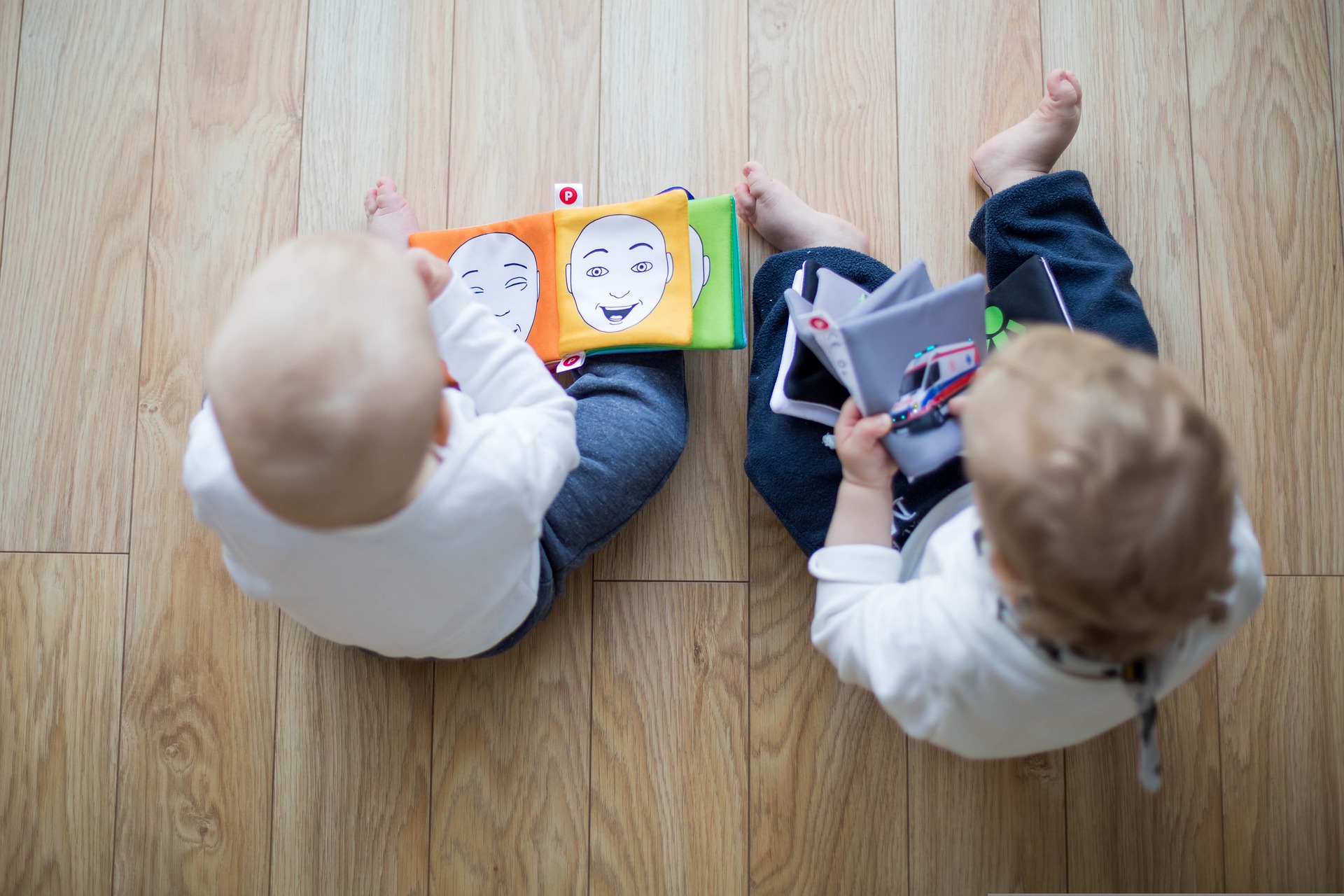
How to Teach Your Baby to Read?

- No comments
Teaching your baby to read is becoming more and more high priority for parents now as it becomes clear that learning to read at a young age offers numerous advantages for the child once he or she begins school. Studies have consistently found that teaching a baby to read and helping children develop phonemic awareness well before entering school can significantly improve their development in reading and spelling. However, when it comes to teaching babies to read, there are two main teaching methods.


These two main methods of teaching a baby or child to read are the whole language method, and the phonics and phonemic awareness method (the phonetic approach), which should be the preferred teaching method in helping children learn to read. Some prefer the whole language method, while others use the phonics approach, and there are also educator that use a mix of different approaches. With the Look-say approach of whole language learning, a child begins with memorizing sight words, and then taught various strategies of figuring out the text from various clues.

The whole language method produces inaccurate and poor readers compared to students of the phonetic approach. Using the whole word approach, English is being taught as an ideographic language such as Chinese. One of the biggest arguments from whole-language advocates is that teaching a baby to read using phonics breaks up the words into letters and syllables, which have no actual meaning, yet they fail to acknowledge the fact that once the child is able to decode the word, they are able to actually READ that entire word, pronounce it, and understand its meaning. So in practicality, it's a very weak argument. English is an alphabetic system, and unlike Chinese, it is not an ideograph like Chinese characters, and should not be taught using an ideographic approach.

I always say that if your baby can speak, then you can begin to teach your baby to read. I won't mention any names here, but I think most parents are probably aware of one very popular "reading" program, which is a whole word approach. Using this method, your baby simply learns to memorize the words without actually reading the words. There is no scientific evidence to suggest that teaching your baby to read using the whole word approach is an effective method. In fact, there are large numbers of studies which have consistently stated that teaching children to reading using phonemic awareness is a highly effective method.

Teaching phonemic awareness to children significantly improves their reading more than instruction that lacks any attention to phonemic awareness. - statement made by the National Reading Panel [1]

I do think that the debate on the effectiveness of teaching a baby to read using either the whole language or phonics method is settled by the statements made by the National Reading Panel. They reviewed over 1,960 different studies to make their conclusions.

In fact, while my wife was pregnant with our first child, I began doing extensive research on the subject on how to teach my baby to read - after birth, of course. Like most parents I also came across the popular whole word teaching approach being heavily marketed. Seeing the infomercials got me quite excited actually, seeing the babies on TV "reading". But after trying it out, it occurred to me that the our baby wasn't actually "reading", but actually "memorizing", and I thought to myself, how are my children supposed to read newer, and more complicated words as they grow older without an appropriate method of decoding those words? This is where my long and extensive research into phonics and phonemic awareness began.

After many hours of research and learning as much as I could, I felt comfortable enough with our simple phonemic awareness teaching method, that my wife and I began giving brief 3 to 5 minute lessons to our daughter, aged 2 years and 8 months. Within just a few short weeks, her reading ability (and I mean actual reading ability, not memorization) was astounding, even for me as the parent who gave the reading instructions. Friends and family alike, were simply flabbergasted at what our daughter was capable of reading at just 2 years and 11 months. Please watch the video above, composed of clips of her reading randomly created sentences for reading fun.

I simply can't imagine this kind of progress possible with the whole word approach - just think of the tens and hundreds of words a young child would have to memorize!

Our son is fast approaching the age where he will soon be able to speak, and we will be using the same simple step-by-step method to teach him to read. If you'd like to learn more about our simple, effective, step-by-step program, please signup for our newsletter below. We also send out new articles, updates, tips, and guides on teaching a baby to read.


How to Teach Phonics and Reading?

- No comments
Teaching children to read by teaching phonics activities is a lot like doing math, where you have to know what the numbers are, how to count, and you need to learn to add and subtract before learning to multiply and divide. Teaching phonics to children is no different where you follow a step by step approach by first teaching the child the alphabet letters and phonics sounds, and then teaching them the combination of different letters to create different words, and using words to form sentences. It is a very logical and sequential buildup of phonics knowledge and reading ability.


Before a child can learn to read, he or she must first learn the alphabet letters, and know the sounds represented by the letters. It's usually easier to teach some consonants and short vowels first before moving on to more complicated things such as consonant digraphs (2 consonants formed to produce one sound, such as "ch" or "ph") and long vowels. As you can see, teaching children to read by the phonics method helps them develop phonemic awareness, and it is also a very logical and straight forward approach.

Start off by teaching your child the phonics sounds. You can choose to teach your child in alphabetic order going from A to Z, or you can teach several commonly used consonant sounds and vowels, and go from there. For example, you may start teaching your child /a/, /c/, and /t/ (slashes denote sound of the letters). Once your child has learn to quickly recognize these letters and properly sound out their sounds, you can then teach them to blend /c/, /a/, /t/ to make the words "cat", or "tac", or "at".

As you introduce more letters and phonics sounds in your lesson plans, you can generate more words, and slowly introduce short, simple sentences to your reading lessons. Depending on the age of your child, I would suggest keeping the phonics lessons relatively short - around 5 to 10 minutes. Sometimes, just 3 to 5 minutes for a short lesson is plenty, and you can easily teach these short phonics lessons 2 or 3 times each day for a total of 10 to 15 minutes. Young children tend to be forgetful, so repetition is very important.

You don't want to make the lessons too long and boring, that the child begins to feel like doing a "chore" when learning to read. So keep it short, fun, and interesting. By keeping the phonics lessons short, you also avoid overwhelming the child with too much information, and always remember to make sure your child has mastered one lesson before moving on to new material. Confusion and uncertainty will only make their learning effort difficult and frustrating - so review often, move on to new material only after they've mastered the current lessons.

So when can you start teaching phonics sounds and lessons to children? Not everyone will agree with me on this, but I believe that if your child can speak, then your child can learn to read. Of course, every child is different and unique, and some children will be more receptive to learning reading than others. One thing for certain, is that the earlier a child learns to read, the better.

We have taught our 2 year old daughter to read through teaching phonics sounds and lessons, and helping her develop phonemic awareness. If you watched the video above, that is our daughter reading randomly created sentences. We simply started teaching phonics sounds to her by spending 5 to 10 minutes each day, spread between 2 to 3 separate lessons, and slowly introduced new letters and reading material.

If you would like to learn more about the simple, effective, step-by-step method of teaching phonics and phonemic awareness, please click below.


Developing Phonemic Awareness and Learning Reading

- No comments
As more research brings to light the advantages of phonics and phonemic awareness instructions have over whole language teaching methods, more parents are becoming aware of teaching using phonics and phonemic awareness skills. Many parents today are concerned about the method that is being used to teach their children how to read, and rightfully so. The whole language method is more of a method of "word memorization", where the child is taught to look at printed words as whole configurations, much like looking at Chinese characters.


Teaching phonemic awareness skills involves the break down of words into individual sounds (phonemes), and then joining the parts to form, or sound out the words. By contrast, whole language learning stresses the flow and meaning of the text, where "sounding out" words is not used, the words are decoded through its larger context, and word memorization plays a key role. What would you rather do, memorize hundreds or even thousands of words based on shapes, or learn a systematic way of reading?

English is not meant to be memorized as shapes and sight objects. It becomes very difficult to learn to read by memorizing and recognizing shapes. Phonics and teaching phonemic awareness skills requires you to memorize the letters and the sounds they represent, and with this method, children as young as two years old can learn to read successfully, and comprehend what they are reading. Try teaching a young child with the whole language learning method, see how successful he or she will be at memorizing shapes. Teaching by using phonics will routinely produce successful readers.

There is plenty of evidence to suggest that phonics is clearly a superior method of teaching children how to read. In the USA, over 30 million adults (14%) are considered functionally illiterate, and are unable to perform simple everyday literacy activities. [1] This however, should not be surprising since over one third of all children cannot even achieve basic reading competency by the time they are in grade four. This is a finding from the National Assessment of Educational Progress (NAEP). Are these children failing at literacy because they are dumb? I I hardly think so, but perhaps it is a result of the poor reading instructions they receive.

It has been proven time and again, that teaching phonemic awareness skill produces superior reading and spelling abilities than whole language teaching methods. Thousands of studies have confirmed this, and the National Reading Panel has also made a clear statement about this.

While most teachers will probably say that they teach using some phonics, the truth is that many teachers are not knowledgeable in the basic concepts of the English language. No, I'm not making a random statement. In a recent study, the researchers stated: "many in-service teachers are not knowledgeable in the basic concepts of the English language". Their study found that even though the teachers may be well versed in children's literature, but they do not know how to address the basic building blocks of language and reading. In their survey of instructors conducted, the researchers found that the teachers performed poorly on the concepts relating to morphemes and phonemes. In another second study, over 80% of the interviewed instructors agreed that phonics is a desirable method to use for beginning reading instructions. [2]

Some argue that a child will acquire a knowledge of phonics on his or her own after learning to read using whole language methods. While this may be true for some children, it is hardly the case for the other children with reading difficulties. When a child is taught to read using a whole word approach, they develop a habit of looking at all the words by their whole configurations, and this prevents the child from seeing the phonetic structure of the words. Real readers who learned to read by learning phonemic awareness skills do not need clues or cues to help them recognize shapes - they develop an automatic ability to decode the letters and words.

Ultimately, it is up to the parents to decide the path for which to teach their children to read. They can either simply leave it up to the education system, and hope that their child does not end up being one of the 38% grade four students which do not develop even basic reading achievement, or they can take the initiative and make the decision to help their children develop phonemic awareness skills early on before even starting kindergarten. Research on phonemic awareness has shown time after time that phonemic awareness skills predicted reading and spelling success of children in school.


Teaching Children to Read and Write

- No comments
Most parents, at one point or another, frets over the education and the development of their children. Many concerned parents research and seek information on the topic of teaching children to read and write. I for one, am glad to see so many parents wanting to get an early start for their children in reading and writing, because studies have shown that developing these abilities early on before entering school provides numerous benefits and advantages later on as the child progresses through school.


More worrisome should be the fact that over one third, 38% to be exact, of all grade 4 students cannot even achieve a basic level of reading ability according to the National Assessment of Educational Progress (NAEP). This is an alarming statistic. Will your child become one of the 38% who cannot reach basic reading achievement by grade 4? For most children, this poor ability to read can be easily prevented with early phonemic awareness teaching.

Reading must begin early in the life of a child, whether it is just an alphabet letter, a word, a sentence, a paragraph, or a story. Teaching children how to read must begin early on, and children should be exposed to books, stories, rhymes, and be read to on a daily basis. Children as young as 2 years old can learn to read if you teach them to read with the proper instructions. Please watch the video below of a 2 year 11 months old reading randomly constructed sentences.

As Lida Williams said, almost 100 years ago:

Phonics is not a method of teaching reading, but it is a necessary part of every good, modern method. It is the key to word mastery, and word mastery is one of the first essentials in learning to read. A knowledge of the sounds of letters, and of the effect of the position of the letter upon its sound, is an essential means of mastering the mechanics of reading, and of enabling children to become independent readers.

100 years later, this still holds true. There has been a great debate on what method of teaching is best to teach children how to read: whether phonics or the whole language method is better. The whole language learning to read method is more of a "word memorization" plan, where a young child is supposed to memorize the "shape" of the word, and say it.

It is important to distinguish the difference between phonological awareness and phonemic awareness. Phonological awareness is very broad, and includes phonemic awareness as a sub category. Phonemic awareness is very narrow, and it is only focused on the phonemes, which are the individual sounds of letters. There are no shortage of studies which have repeatedly found and concluded that teaching phonemic awareness to young children produces exceptional reading and spelling abilities. You can read more about research on phonemic awareness here.

The whole language method simply expects a child to "read" when presented reading material, and by memorizing sight words. The phonics method is a bottom up approach where you teach children to read in a logical and sequential order. You first teach children the alphabet letters and the sounds they represent; then you teach children to combine (or blend) various letter sounds together to form words; which is then followed by reading sentences and simple stories. This is a logical progression for children learning to read, where they develop accuracy in decoding words and pronouncing words. This method of teaching also helps the child to spell correctly.

There's no doubt that phonics and phonemic awareness instruction is the superior method to teach children how to read. We have successfully used phonemic awareness instructions to teach our children at age 2 to read words, sentences, paragraphs, and simple story books. If you would like to learn about our simple, step-by-step method to teach your children to read and write, please click below:


Advantages of Teaching Children Reading Early

- No comments
Before a child learns to read, he or she must first learn the spoken language, and this is one of the first instances where family members such as dad, mom, older siblings, and grandparents play an important role in "teaching" the child the spoken English language. Whether young children realize it or not, they gain very early exposure to the alphabet when parents sing the alphabet song to them. They begin to develop language skills by being read to and spoken to. One of the keys to teaching children reading early on is by exposing them to alphabet letters, books, and reading to them often.


Reading nursery rhymes and children's books are an important part of getting children to understand printed text. Talk to your children, and talk to them often, whether they understand or not is not important when they're just babies. The more you talk and interact with your little ones, the better they will develop. The key is exposure, and repeated exposure. Once your child learns to speak, you can begin teaching them reading at home.

I often hear parents say that they don't want to "push" their child too hard. How can teaching your child to read at a young age be considered "pushing" them too hard? If you as a parent already have the mentality that reading is a chore, and teaching them to read is pushing "too hard", you certainly can't expect your children to be excited about learning reading. On the contrary, learning to read offers a young child an opportunity for a lifetime to learn, discover, and enjoy the wonders of reading. Parents (including myself) will often underestimate the abilities and learning capabilities of young children. When we first began our teaching reading program with our first child when she was 2 years and 8 months, little did we expect that in just a few short weeks, she would be reading not just words, but sentences and story books. After about 3 months, by the time she was 2 years 11 months old, our daughter could read "Step in to Reading - step 2 (pre-school to grade 1 level)" books with some guidance. The benefits of learning to read were apparent - improved speech clarity, and better reading ability and reading comprehension.

There are no shortage of studies which find many benefits in teaching children reading at an early age. For example, one study administered a Stanford achievement test at the start of kindergarten and then again at the end of grade one found that early language based skills were highly associated with later academic performance in school aged children. [1] Similar studies also found that a high level of letter knowledge in kindergarten can reliably predict better later literacy skills.[2] Having a home environment that's conducive to literacy growth is critical in a child's development, and directly affects a child's language and literacy development. Studies have found that responsiveness and support of the home environment is the strongest predictor of children's language and early literacy skills. [3] My point here is help make parents aware that children who enter kindergarten with highly developed early reading skills will achieve greater success with systematic reading education. [4]

It's never too late to start home lessons and programs to teach your children to read. Regardless how old your child is, starting a reading program at a young age will have ample benefits. Start with lots of talking, singing, and reading to your child right from birth, and once your child is able to speak, you can start a simple reading program.

Begin with teaching your child some basic letters and their sounds, and even as soon your child learn just a few letters and their sounds, you can begin teaching them simple blends using the letter knowledge that they have acquired. Work on ear training with your child on oral blending and word segmentation. One of the keys to teaching children read is developing phonemic awareness. Studies have shown that phonemic awareness is one of the best predictors of reading success in children.


Teaching a Child to Read at an Early Age

- No comments
Did you know that 38% of grade four students have reading abilities below the lowest basic level as determined by the National Assessment of Educational Progress (NAEP)? The NAEP is the only ongoing survey of what students known and tracks their performance in various academic subjects for the United States. In their report, the NAEP found that 38% of grade four students had reading achievement below basic levels, with a basic level reading score being 208.


To put things in perspective, the US reading scale has an upper limit score of 500, with average reading scores for grade 4 (217), grade 8 (264), and grade 12 (291). The grade 4 reading achievement levels are categorized by the NAEP as Advanced (268 score), Proficient (238 score), and Basic (208 score), and the basic reading achievement level is defined as follows by the NAEP:
Fourth-grade students performing at the Basic level should demonstrate an understanding of the overall meaning of what they read. When reading text appropriate for fourth graders, they should be able to make relatively obvious connections between the text and their own experiences and extend the ideas in the text by making simple inferences. [1]
Unfortunately, over a third of all grade four students read at levels even below basic. Is your child having reading difficulties? Research on Phonemic Awareness have found that early reading helps improves a child's reading and spelling abilities. In fact, the National Reading Panel has concluded based on their massive review of over 1,900 studies that teaching phonics and phonemic awareness produces better reading results than whole language programs.

There are numerous documented benefits and advantages of teaching children to read early on, and teaching them to reading using phonics and phonemic awareness instructions. It is clear that early language and reading ability development passes great benefits to the child as they progress through school at all grades, and that early language and reading problems can lead to learning problems later on in school. For example, a Swedish study found that children with a history of reading problems at school entry scores significantly below average on reading in grade 4. As well, children that shows very low interest in books and story reading before age 5 also scored similarly low on sentence reading in grade 4. [2] This is just one of many studies which have similar findings, and this makes it an imperative for parents to begin exposing their children to books and reading at an early age.

So how early?

Good question!

There's no set guideline on when you should start teaching your children to read; however, you can start cultivating your child's love for books and reading as soon as they're born. Obviously, very young babies would not even know what books are, however, talking to your child and reading to your child will help them develop a keen liking for books and stories. As your child grows and gets older, avoid TV-sitting them, because as they develop a dependency on television as their main source of entertainment, it becomes very difficult to dislodge that need for TV entertainment, and get them to enjoy reading books. Instead, keep age appropriate books all around the house, and read to them often. You'll find that they'll start picking up books and pretend to read themselves, although at very early ages, they still cannot read.

People typically think that kindergarten or grade one would be an appropriate time for their children to start reading; however, this is not the best approach as studies have repeatedly found that children with good phonemic awareness before entering kindergarten continues to outperform, and achieve exceptional reading and spelling abilities as they progress through school. On the other hand, children who enter school with reading difficulties may continue to have reading and spelling difficulties.


How to Teaching Letter Names and Sounds?

- No comments
So, you want to teach your child to read, but before a child can learn to read, he or she must first learn at least some of the letters in the alphabet, their names, and the sounds that they represent. To be able to read, a child must be able to recognize the letters, know the sound of the letters, and be able to recognize the letters quickly and say the sound without hesitation. There is plenty of discussion and disagreement on whether it's better to teach children using whole language programs or using methods which incorporate phonics and phonemic awareness instructions. I think the debate on this is settled when the National Reading Panel stated from their findings of reviewing over 1,900 studies that phonics and phonemic awareness produces superior reading results than whole language programs.

There is also some debate on whether to teach your child only letter names, or only the sounds which the letters represent. However, studies have also settled this debate by finding that teaching a child alphabet names and sounds together produces the best results. In fact, studies have found that there is little value in teaching preschoolers letter forms or letter sounds separately. This was indicated by an Australian study involving 76 preschool children. The children received 6 weeks of training in either letter awareness, phonemic awareness, or control tasks, and then received another 6 weeks of training in either letter-sound correspondence or control tasks. The study found that training in either phoneme or letter awareness assisted with learning of letter-sound correspondences, and that the phonemically trained children group had an advantage on recognition tasks. The study found that there is little value in training in letter form or letter sounds separately. [1]


As you can see, there is basically no point in only teaching either the names of the alphabet letters, or the sounds the letters make. A child must learn the name and the sound of the alphabet letter. When teaching your child the alphabet, instead of simply teaching them the name of the alphabet such as "this is the letter A", teach them like so:

"This is the letter A, and the letter A makes the /A/ sound." (note: the /A/ denote the sound "A" makes, and not its name). Similarly, you can teach your child the other alphabet letters in this way including both name and sound of the letter. This is the way I teach my children the alphabet letters. Other studies have also determined that teaching the letter names and sounds together helped children learn.

58 preschool children were randomly assigned to receive instructions in letter names and sounds, letter sound only, or numbers (control group). The results of this study are consistent with past research results in that it found children receiving letter name and sound instruction were most likely to learn the sounds of letters whose names included cues to their sounds. [2]

To be able to effectively teach your children the sounds of letters, you must first master the proper pronunciation of the letters yourself. It is critical for you as a parent to be able to first say the sounds of the letters correctly before teaching your children, and this is much tougher than it may seem.


Phonemic Awareness Research

- No comments
Phonemic Awareness is the ability to hear, identify, and manipulate the individual sounds which make up words. In the past few decades, large amounts of research have improved our understanding of phonemic awareness and its importance in helping children learn to read. There are hundreds of research studies conducted on all aspects of phonemic awareness, and how it affects and benefits reading and spelling abilities of young children. The National Reading Panel of the US have stated that phonemic awareness improves children's reading and reading comprehension, and that it also helps children to learn to spell. Based on the research and reviews done by the National Reading Panel, they have concluded that teaching phonics and phonemic awareness produces better reading results than whole language programs.


When teaching phonemic awareness, children are taught the smallest units of sound, or phonemes. During the teaching process, children are taught to focus on the phonemes, and learn to manipulate the phonemes in words. Studies have identified phonemic awareness and letter knowledge as the two best school-entry predictors of how well children will learn to read during the first 2 years of instruction. In a review of phonemic awareness research, the National Reading Panel (NRP) identified 1,962 citations, and the results of their meta-analysis were impressive as stated in the NRP publication:
Overall, the findings showed that teaching children to manipulate phonemes in words was highly effective under a variety of teaching conditions with a variety of learners across a range of grade and age levels and that teaching phonemic awareness to children significantly improves their reading more than instruction that lacks any attention to phonemic awareness (PA).

Specifically, the results of the experimental studies led the Panel to conclude that PA training was the cause of improvement in students’ phonemic awareness, reading, and spelling following training. The findings were replicated repeatedly across multiple experiments and thus provide converging evidence for causal claims. [1]
As can be clearly seen, teaching children phonemic awareness early on significantly improves their reading and spelling abilities. Furthermore, the NRP research stated that these beneficial effects of phonemic awareness teaching goes well beyond the end of training period. The NRP phonemic awareness research also found that the most effective teaching method was to systematically teach children to manipulate phonemes with letters, and teaching children in small groups.

Phonemic awareness (PA) teaching provides children with an essential foundation of the alphabet system, and a foundation in reading and spelling. The NRP has stated that PA instructions is a necessary instructional component within a complete reading program.

Below are two other studies done on phonemic awareness, and its effects on reading abilities. In a study involving children aged 6 to 7 years old, researchers found that the few readers at the beginning of grade one exhibited high phonemic awareness scored at least close to perfect in the vowel substitution task, compared to none in children of the same age group who could not read when they entered school. The research also stated that phonemic awareness differences before instruction predicted the accuracy of alphabetic reading and spelling at the end of grade one independent from IQ. Children with high phonemic awareness at the start of grade one had high reading and spelling achievements at the end of grade one; however, some of the children with low phonemic awareness had difficulties learning to read and spell. The study suggested that phonemic awareness is the critical variable for the progress in learning to read. [2]

Another study looked at phonemic awareness and emergent literacy skills of 42 children with an average age of 5 years and 7 months. The researchers indicated that relations between phonemic awareness and spelling skills are bidirectional where phonemic awareness improved spelling skills, and spelling influenced the growth in phonemic skills. [3]

It is clear that with the conclusions made by the National Reading Panel and other research studies on the benefits of phonemic awareness, children should be taught PA at a young age before entering school. This helps them build a strong foundation for learning to read and spell.


Your Content Here
Your Content Here
Your Content Here
Your Content Here


How to Teaching Phonics to Children?

- No comments
Phonics is a necessary part of any good method of teaching children to read. Teaching Children phonics and helping them develop phonemic awareness is the key to mastering words, which is the first key step toward successful reading. Children need to develop a knowledge of the letters, the sounds represented by the letters, and the connection between sounds created by combining the letters where words are formed. This is an essential part of mastering reading, and enabling children to become independent readers. By learning phonics and phonemic awareness, children gain the ability to pronounce new words, develop clear articulation, improve spelling, and develop self confidence.


When it comes to teaching your children to read, it must include three basic principles:

1) Reading for the child, whether it's a word, sentence, or story, must appeal to your child's interests.

2) Never pressure or force your child into reading, turning it into a negative "event" in their life. It should be a fun, enjoyable, and rewarding experience. This will take ample amounts of patience on the part of the parents, and some creativity.

3) Teaching your child to read must begin with the mastery of the phonemes - the individual sounds which makeup the words.

The basic process of teaching phonics and phonemic awareness to children includes teaching them the letters and letter sounds; then you teach the child to combine (or blend) various letter sounds together to form words; which is then followed by reading sentences and simple stories. This is a logical progression for children to learn reading, where they develop accuracy in decoding words and pronouncing words. This method of teaching also helps the child to spell correctly. Gradually, the different elements of phonics are combined to produce new words, and leads to the discovery of new words by the child using this process which becomes an "automatic reflex".

Teaching phonics to children should take 10 to 15 minutes each day, and these "lessons" should take place in several small sessions each day - such as 4 or 5 session lasting 3 to 5 minutes each. For older pre-school children, lessons can be slightly longer; however, several minutes each session is all that's needed.

One way to start teaching phonics to children with with ear training - by helping them develop the understanding that words are made up of smaller units of sounds, or known as phonemes, and when you combine these sounds, a word is formed. You can start this with very short sessions, as already mentioned. A few minutes a day is all that you need. The key, however, is consistency and patience.

During these short sessions, sound out words slowly and distinctly. You can do this without even making the child aware that you are trying to teach them. Simply take words from your everyday speaking to your child and include oral blending sounds into your sentences. For example, if you wanted to ask your child to drink his milk, you could say: "Joe, d-r-i-n-k your m-ilk." The words drink and milk are sounded out slowly and distinctly. The level of sound separation can be set by you to increase or lower the difficulty. Thus, if Joe has a tough time figuring out that d-r-i-n-k means drink, you can lower the difficulty by blending the word as dr-ink instead.

Alternatively, you could simply pick different words and play blending sounds games with your child. You simply say the sounds of the word slowly, and ask the child try to guess what you are saying.

This concept of individual sounds forming words may take some time for your child to grasp. Some children will pick it up quickly, while other children may take longer, but one thing that's certain is that if you keep it up, your child will catch on. Below are some sample words which you can use to play blending sounds activities with your child.

J-u-m-p   J-ump
R-u-n   R-un
S-i-t   S-it
S-t-a-n-d   St-and
M-i-l-k   M-ilk
S-t-o-p   St-op

The first word is more segmented than the second word, and will be more difficult to sound out. Please note that hyphens are used to indicate the letter sounds instead of slashes.

ie: J-u-m-p  /J/ /u/ /m/ /p/

This is done to make things easier to read; however, when you read it, you should not read the names of the letters, but instead say the sounds of the letters. This type of ear training for phonics and phonemic awareness should continue throughout the teaching process, even well after your child have grasped this concept. It can be applied to words with increasing difficulty. Again, please always keep in mind that not all children can readily blend the sounds to hear the word, so you must be patient, and drill this for days, weeks, or even months if needed. Consistency and frequency is the key to success here, and not sporadic binge sessions


How to Help Your Child Learn to Read?

- No comments
The ability to read is vital for success. It helps your child succeed in school, helps them build self-confidence, and helps to motivate your child. Being able to read will help your child learn more about the world, understand directions on signs and posters, allow them to find reading as an entertainment, and help them gather information.


Learning to read is very different from learning to speak, and it does not happen all at once. There is a steady progression in the development of reading ability over time. The best time for children to start learning to read is at a very young age - even before they enter pre-school. Once a child is able to speak, they can begin developing basic reading skills. Very young children have a natural curiosity to learn about everything, and they are naturally intrigued by the printed texts they see, and are eager to learn about the sounds made by those letters. You will likely notice that your young child likes to look at books and thoroughly enjoys being read to. They will even pretend to behave like a reader by holding books and pretend to read them.

As parents, you're the most important first step in your children's journey into the wonderful world of reading. It is up to you to create the most supportive environment that turns your child on to reading - such as reading aloud to them often during the day and before bedtime, and placing age appropriate books for children around the house, so that the child will have access to plenty of books. Reading often to your child will help develop their interest in books and stories, and soon they will want to read stories on their own.

With the help of parents, children can learn how to read. Make reading into a family activity, and spend time playing words games and reading story books. This will not only help you child learn to read, but it'll also help them build a rich vocabulary, teach them language patterns, and help them fall in love with books and reading.

Below are some tips to help you teach your child to read.

Talk to your child - before a child can learn to read, he or she must first learn to speak. Talk to your child about everything and anything - whatever interests them. Tell them stories, ask your child lots of questions, play rhyme games, and sing songs with them.

Read to your child consistently everyday - we're all creatures of habit, and enjoy having a daily routine. Set time aside each day to read to your child. Read to your child every night. Make this their "cool down" period before they go to sleep. This not only helps your child develop an interest in books and reading, it also help the parent bond with the child, and develop a healthy relationship.

Help your child develop reading comprehension - typically, parents will take the time to read for their children; however, many parents do not put much emphasis or thought on whether their children understands what they've just been read to. Instead, occasionally, make an effort to question your child on what you've just read. For example, you read to your child:

"Jack and Jill went up the hill..."

You pause briefly and ask your child:

"So where did Jack and Jill go?" Or alternatively, "Who went up the hill?"

Young children may not catch on right away initially, and it may take a little practice, but they'll eventually catch on and begin to develop a deeper understanding of what they are reading. This is a very important step in helping your child develop reading comprehension. Of course, don't do this every single time you read, or your child will quickly get bored and lose interest. Do it at random times, and do not over do it.

Help your child to read with a wide variety of books and keep reading fun - There is no shortage of children books, and you should always have a wide variety of children books, stories, and rhymes available. Reading is a lot of fun, for both parents and children. Read to your child using drama and excitement, and use different voices. Give your child the option of choosing what book they want you to read, instead of picking the book you want to read to your child.

When reading to your child, read slowly, and point to the words that you are reading to help the child make a connection between the word your are saying and the word you are reading. Always remember that reading should be a fun and enjoyable activity for your children, and it should never feel like a "chore" for them.